India and Pakistan escalation limited by nuclear mutually assured destruction

Hasnain Malik
—
Head of EM Equity Strategy
7 May 2025
Posts
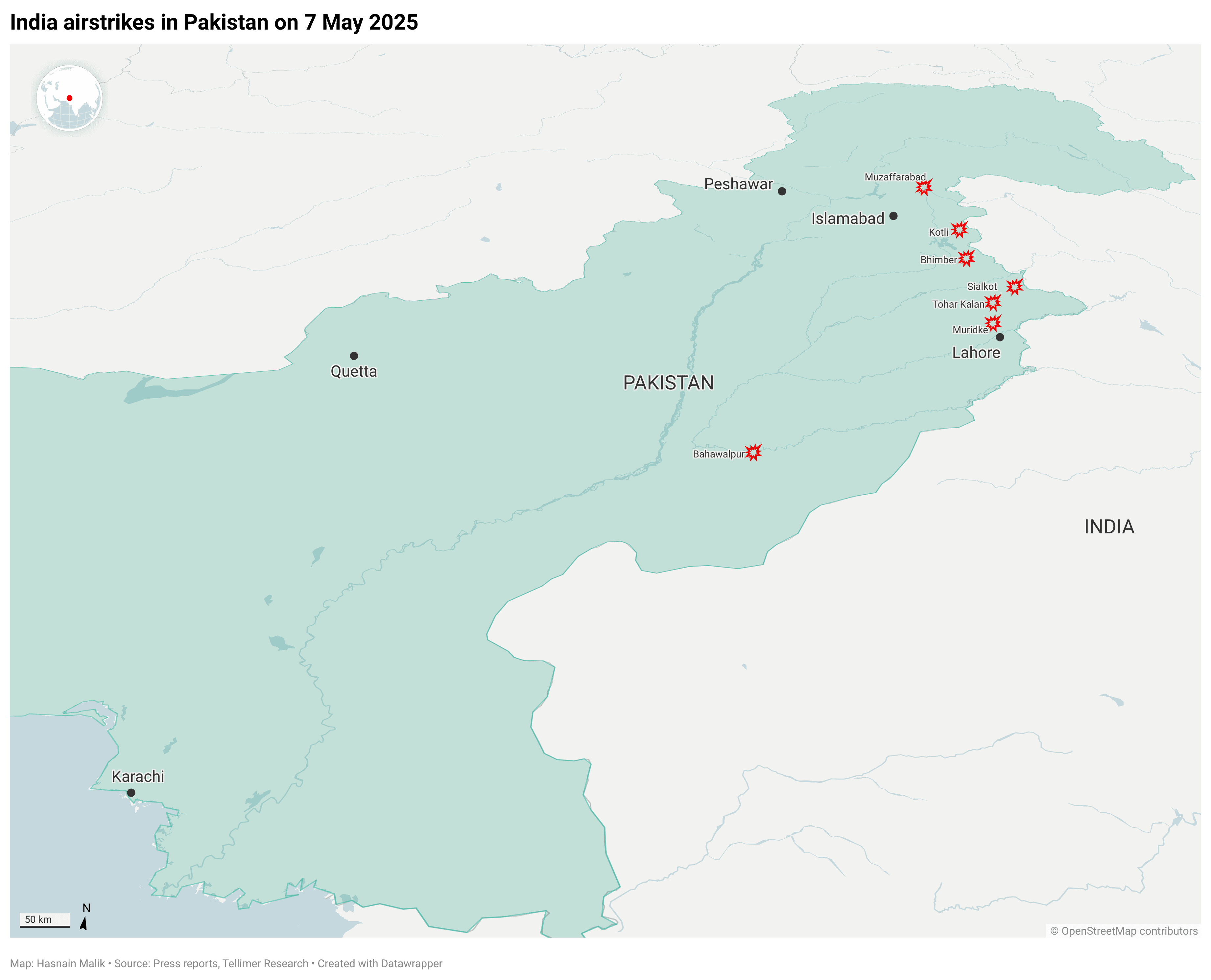
Indian airstrikes in seven locations in Pakistan in reprisal for recent Kashmir terror attack it blames on Pakistan
Choice of low population density and non-military sites implies, so far, a moderate escalation (but more than in 2019)
Nuclear MAD limits escalation and duration of any market decline (Pakistan more sensitive, given external capital need)
India conducted airstrikes on seven locations in Pakistan on 7 May. Pakistan claimed to have shot down five Indian fighter jets. This military escalation followed the suspension of the Indus Waters Treaty and the severing of diplomatic links after the 23 April terror attack in Indian-controlled Kashmir (which India blamed on Pakistan and for which Pakistan denied any responsibility and called for an independent investigation).
The choice of targets with low population density, little commercial activity, and no military installations implies a moderate escalation, albeit more than that seen in the last cycle of conflict between the two countries in February 2019.
A military conflict between India and Pakistan should be a no contest: India's military spend, number of active troops, naval fleet, fighter aircraft, tanks, and attack helicopters are far greater than those of Pakistan (by multiples of 8.5x, 2.2x, 2.4x, 1.6x, 1.6x, 1.4x, respectively, according to SIPRI and GFP data).
However, the battlefield is metaphorically (but, hopefully, never literally) levelled by the nuclear deterrent on both sides, with a similar number of weapons (180 and 170, respectively, according to ICAN data) and publicly demonstrated capability on both sides (with tests most recently in 1998). Nuclear mutually assured destruction (MAD) is precisely what limits conventional military escalation.
Read the full report on the Tellimer App
Hasnain Malik is Head of EM Equity Strategy @ Tellimer.